What
I Say



ABOUT THIS BOOK
The book opens with the story of the August 2003 blackout in the northeastern United States. A bug in a SCADA monitoring system, limited control-room training and poorly pruned trees near high-voltage lines combined to leave 50 million people without power. From this real-world infrastructure failure, the book draws a direct parallel with cybersecurity: software defects, poor preparation and operational negligence are the same factors that make cyberattacks possible. It then examines software and hardware vulnerabilities, the role of human error and the cultural flaws that shape how organizations manage processes and data. Throughout, the focus remains on what this means for companies and the people who lead them. Effective security depends not only on technological defenses, but on building and maintaining a culture of security.
Robert Mueller
Former FBI Director, whose remark at the 2012 RSA Conference opens the book: every company has been hacked or will be.
Henry Ford
Security as a reserve of knowledge, experience and ability, the idea that frames the whole book.
PricewaterhouseCoopers
The forecast of cyber-insurance policies above ten billion dollars in 2020, with few claims actually paid.
2003 Northeast Blackout
The failure that cut 60 GW and left 50 million people in the dark, at an estimated cost of 8 billion dollars.
FirstEnergy, Eastlake (Ohio)
The control room where the chain of failures began, unnoticed for an hour because of a software bug.
SCADA Systems
Supervisory control software whose undetected bug kept the first alarm from going off.
NASA Earth Observatory
Satellite images of the New York area before and after the blackout.
NCBI
The estimate of around one hundred deaths linked to the blackout, from road accidents to shortages of life-saving drugs.
Blackout Investigation Commission
Three causes identified: a SCADA software bug, insufficient training and unpruned trees near the lines.
Smart Grid
The digitalization of power networks after 2003: more efficient, but exposed to cyberattacks as well as physical ones.
Piracy, from the Caribbean to Hormuz
The historical analogy: every form of piracy, armed or digital, lives on the weaknesses of its victims.
U-Boats in World War II
Attacks on nearly defenseless convoys, showing that weak targets carrying value are inevitably attacked.
Admiral Hyman G. Rickover
The father of nuclear naval propulsion, for whom the human factor counted more than any technical aspect.
Security Updates
Flaws are patched quickly, but installing updates is up to each company, and insecure versions often remain for years.
Cultural Flaws
Weaknesses in processes and behavior, more pervasive and harder to close than any technical flaw.
Attack Surface
The exposure that bug fixes reduce over time but can never bring to zero.
Cybersecurity is too often discussed through the language of fear: alarming statistics, worst-case scenarios and promises of definitive solutions. This book argues that understanding how attacks work, and why they succeed, is the most effective protection available to any organization. Many companies hit by an attack lacked even the most basic security measures, or could not prove they had them. Knowing where the real weaknesses lie allows executives and decision makers to invest where the risk is real, not where fear is loudest.
Simone Massaro · Dino Esposito
Cybersecurity & Risk Management
ABOUT THIS BOOK
The book opens with the paradox at the heart of renewable energy: the forces that make it possible, such as wind and sunlight, cannot themselves be controlled. It traces the history of energy production, from James Watt’s steam engine and the first electric utilities to nuclear power, the 1973 oil crisis and the Three Mile Island accident, which turned the world’s attention back to renewable sources. It then explains why their growth is a challenge for the grid. Conventional power plants produce at a steady rate, while wind and solar farms feed in variable amounts of energy that must be balanced against demand at all times. Throughout, the focus remains on the answers available to the industry: energy storage, power forecasting and remote control of production, all of which depend on smart software.
Stephen Hawking
His hope for nuclear fusion as an inexhaustible energy source without pollution, quoted in the introduction.
Lehman Brothers, 2008
The September 2008 meeting at the Federal Reserve in New York, where the book’s journey begins.
“New Energy for America”, 2008
The plan by Barack Obama and Joe Biden to modernize the national grid with smart metering and distributed storage.
James Watt
The instrument maker who around 1781 turned Thomas Newcomen’s steam engine into a usable product, powering the industrial revolution.
Thomas Edison
Founder of the Edison Electric Light Company, the parent of modern electric utilities.
Urs Hölzle
Google’s Senior VP of Technical Infrastructure, on Google as the largest corporate buyer of renewable power, with 2.6 GW committed.
Appleton, Wisconsin, 1882
The world’s first hydroelectric power plant, on the Fox River.
Larderello, Tuscany
Until the late 1950s, the only place in the world producing geothermal electricity on an industrial scale.
1973 Oil Crisis
The shock that slowed energy demand and led Jimmy Carter to a nationwide conservation plan.
Three Mile Island, 1979
The partial meltdown, rated 5 on the 7-point international scale, that turned public opinion against nuclear power.
Mae Jemison
Physician and NASA astronaut, on ideas as potential energy that only action can release.
U.S. Energy Information Administration (EIA)
Its 2017 report, projecting that energy from renewables will double by 2040, faster than any other source.
Eurostat
Data on renewable energy consumption in the European Union in 2016: 17% on average, with Sweden at 53.8%.
Pumped Hydroelectric Storage (PHS)
The most proven form of energy storage, in use for over a century, but with a deep social and environmental impact.
Pellion Technologies
The Massachusetts startup that in 2018 announced lithium-metal batteries with twice the capacity of conventional ones.
Transmission System Operators (TSO)
The operators that can start, stop or reduce wind and solar farms to keep the grid balanced.
Renewable energy is too often discussed only through its benefits: cleaner air, a healthier planet, energy independence. This book argues that its real challenge lies elsewhere, in managing sources that are variable by nature and distributed by design. As the share of renewables grows, keeping the grid balanced becomes a problem that only data, forecasting and software can solve. Understanding this is essential for anyone making decisions about energy infrastructure. The transition will not succeed by controlling nature, but by controlling the technology around it.
Simone Massaro · Dino Esposito
Controlling the Uncontrollable
ABOUT THIS BOOK
AI for Executives and Policy traces the intellectual journey from the earliest philosophical attempts to formalize human reasoning, through Leibniz, Boole and Hilbert, to the mathematical breakthroughs of Gödel, Church and Turing that defined the boundaries of computation. It follows the emergence of Artificial Intelligence as a formal discipline at Dartmouth in 1956, the development of Machine Learning and neural approaches, and the ongoing questions about what machines can and cannot actually do. Throughout, the focus remains on what this trajectory means for organizations and the people who lead them.
Alan Turing
Computation, machine intelligence and the question of whether machines can think.
John McCarthy
Coined the term Artificial Intelligence and organized the Dartmouth conference.
Gottfried Leibniz
The vision of a universal calculus of reasoning, anticipating symbolic AI by 300 years.
John von Neumann
Pioneered the stored-program computer architecture fundamental to modern AI.
George Boole
The algebra of logic - translating the rules of thought into mathematical notation.
Alonzo Church
Developed lambda calculus, proving foundational results in computability theory.
David Hilbert
The challenge to derive all mathematics from finite axioms through mechanical procedures.
Bertrand Russell
Pursued the logical foundations of mathematics, influencing the formalization of reasoning.
Kurt Gödel
The incompleteness theorems that revealed fundamental limits of formal systems..
Dartmouth - 1956
The meeting that formally established Artificial Intelligence as a research discipline.
Turing Machine
The abstract mathematical model defining the boundaries of what can be computed.
Bletchley Park
Where wartime codebreaking accelerated the development of computing and machine reasoning.
Lambda Calculus
Alonzo Church's formal system for expressing computation through function abstraction.
Church-Turing Thesis
The foundational claim linking effective procedures to Turing-computable functions.
Machine Learning
The paradigm shift from rule-based programming to systems that learn from experience.
Artificial Neural Networks
Computational models inspired by biological neural structures, enabling pattern recognition.
Artificial Intelligence is too often discussed through the lens of what it can do today. This book argues that understanding what AI is - its origins, its evolution, its foundational ideas and its inherent limitations - is essential for anyone responsible for decisions about its adoption and governance. The intellectual journey from Leibniz to modern neural networks is not a history lesson. It is the framework through which executives and policy makers can distinguish between genuine capability and inflated expectation.
Simone Massaro · Dino Esposito
Artificial Intelligence for Executives and Policy Makers
The Fiat G.91T at the center of the Via Fontanarossa roundabout in Catania is the aircraft once flown by Captain Giovanni Massaro, Simone Massaro's father. Its story runs from the 41st Wing at Fontanarossa to a monument for the whole city.
On 1 October 1965 the 41st Wing (41° Stormo) of the Italian Air Force (Aeronautica Militare) was re-formed as an anti-submarine wing, with its 88th Group based at Catania Fontanarossa; in 1971 the group moved to nearby Sigonella. During the Cold War the wing carried out surveillance and patrol activities across the Mediterranean, and the Sicilian bases played a strategic role in controlling the air and maritime space of the area.
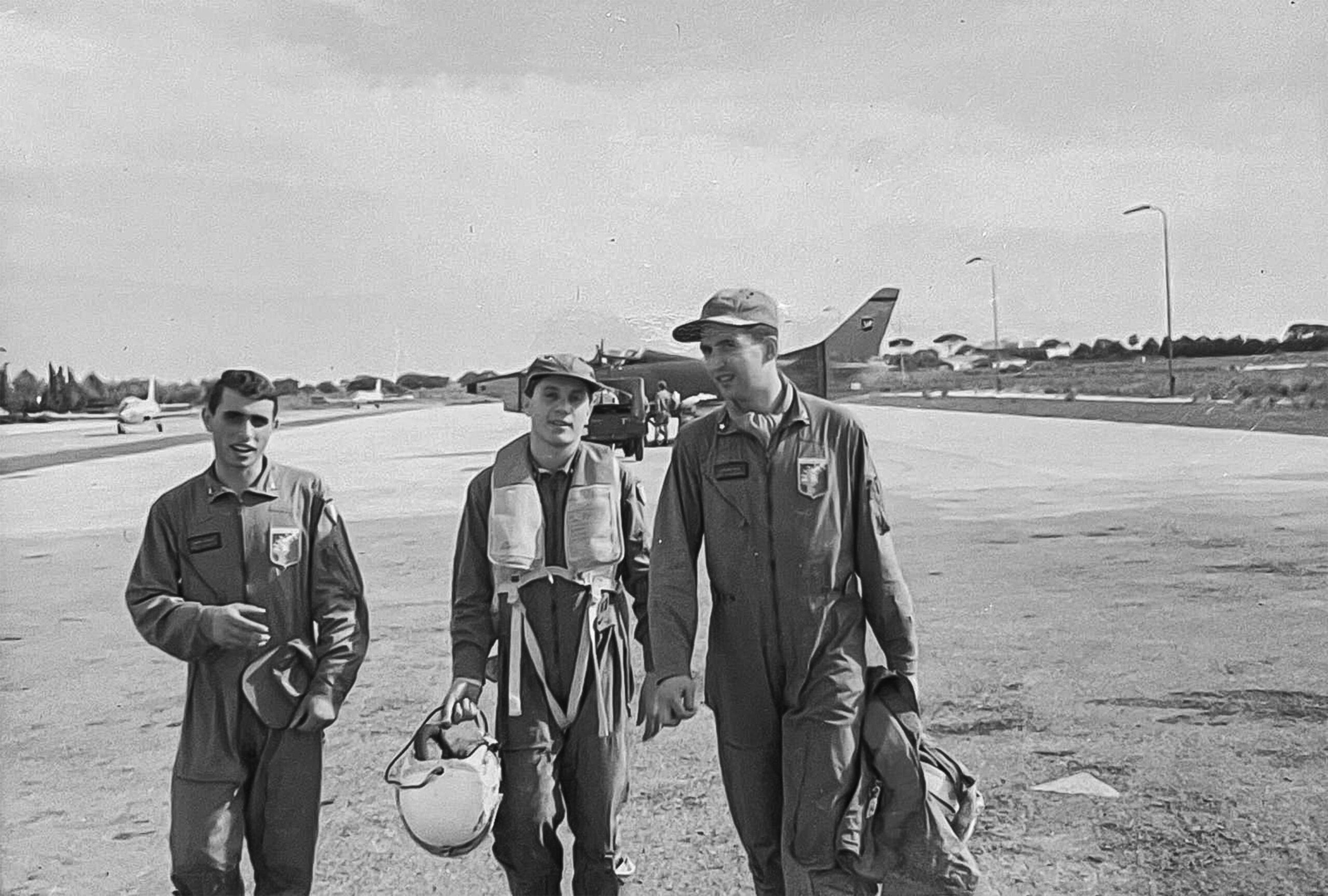
Captain Giovanni Massaro flew as part of the 41st Wing's operational activities, including on Fiat G.91T aircraft. Although designed as an advanced trainer and light tactical aircraft, the G.91T was employed to meet the Air Force's operational and training needs of the time. These were years of intense activity, with continuous missions in a complex Mediterranean operational environment.
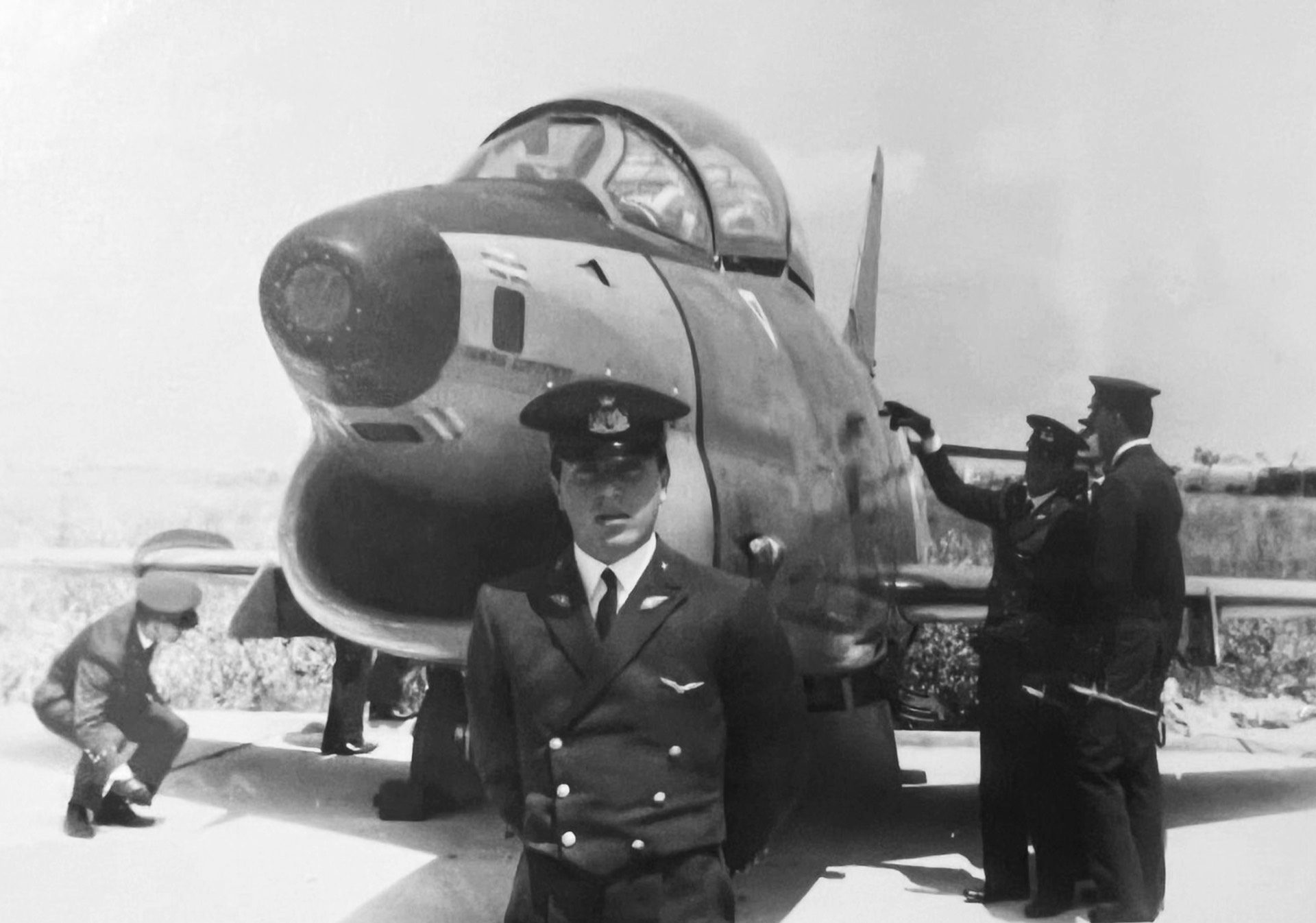
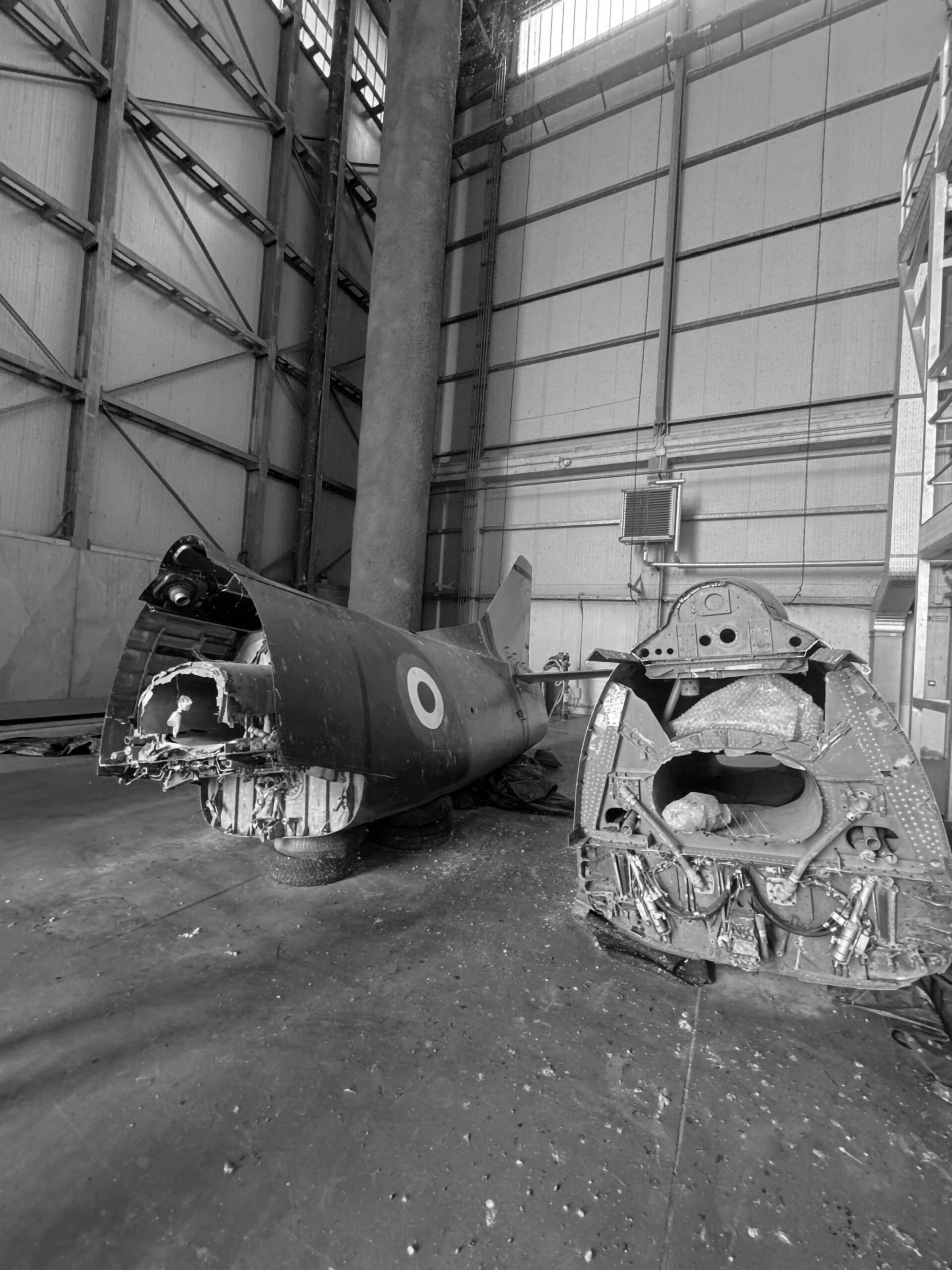
The Fiat G.91T flown by Captain Massaro was retired from service after reaching its intended flight-hour limit. Following standard procedure, the aircraft was dismantled and its components were distributed across Italy.
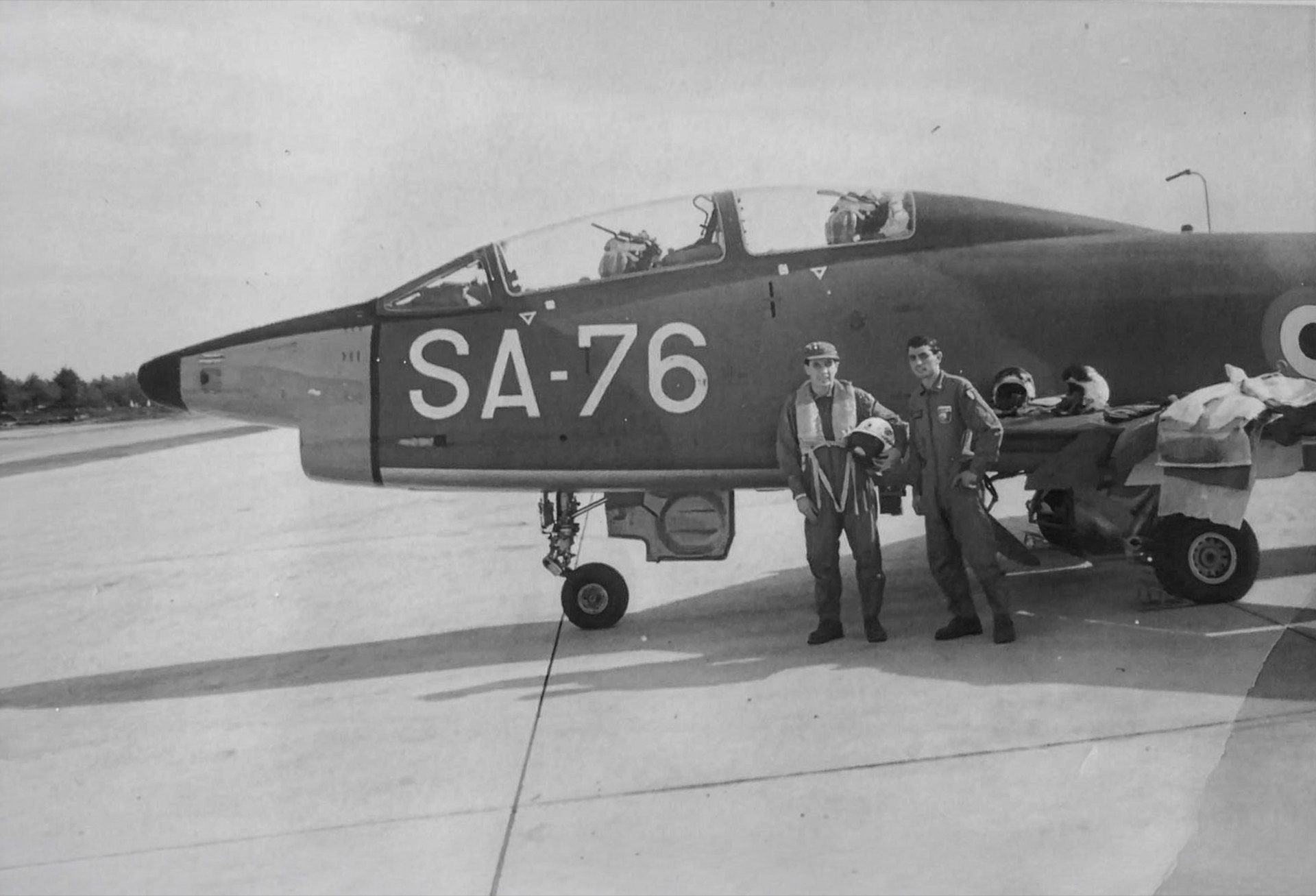
In 2019, with the support of Free Mind Foundry in Acireale, Simone Massaro got in touch with the Sigonella air base and with several of his father's former comrades from the Acireale branch of the Associazione Arma Aeronautica (Air Force Association). From these meetings, the story of Captain Giovanni Massaro re-emerged.
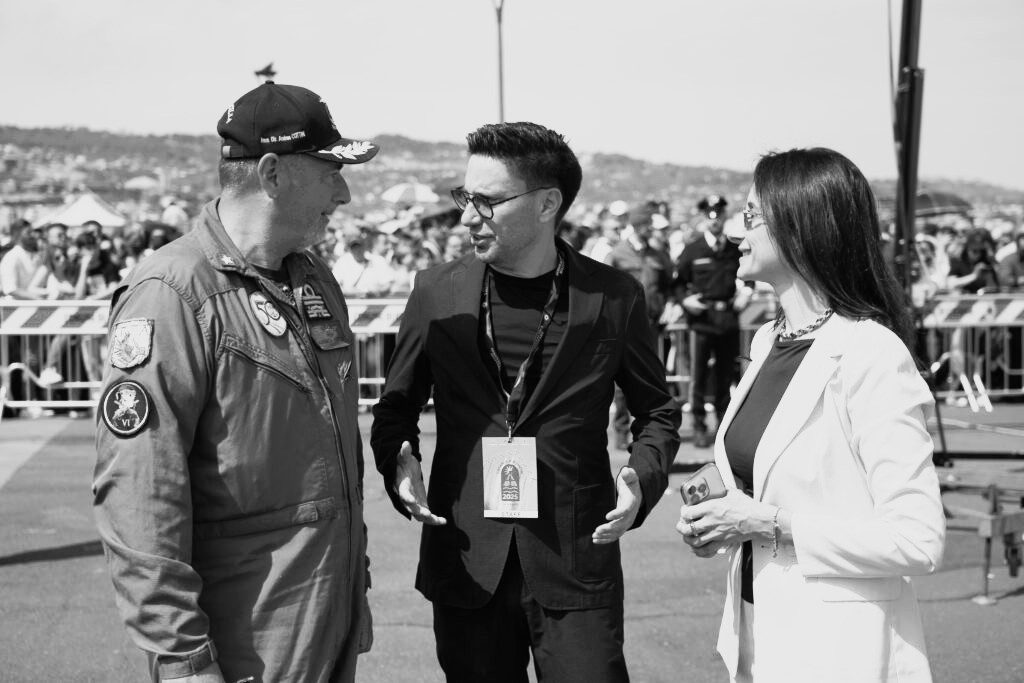
Through an agreement between BaxEnergy and the Air Force General Staff (Stato Maggiore dell'Aeronautica Militare), Simone Massaro obtained the five surviving sections of the G.91T his father had flown: the fuselage, the wings and part of the original structure. This marked the start of the recovery and restoration project.
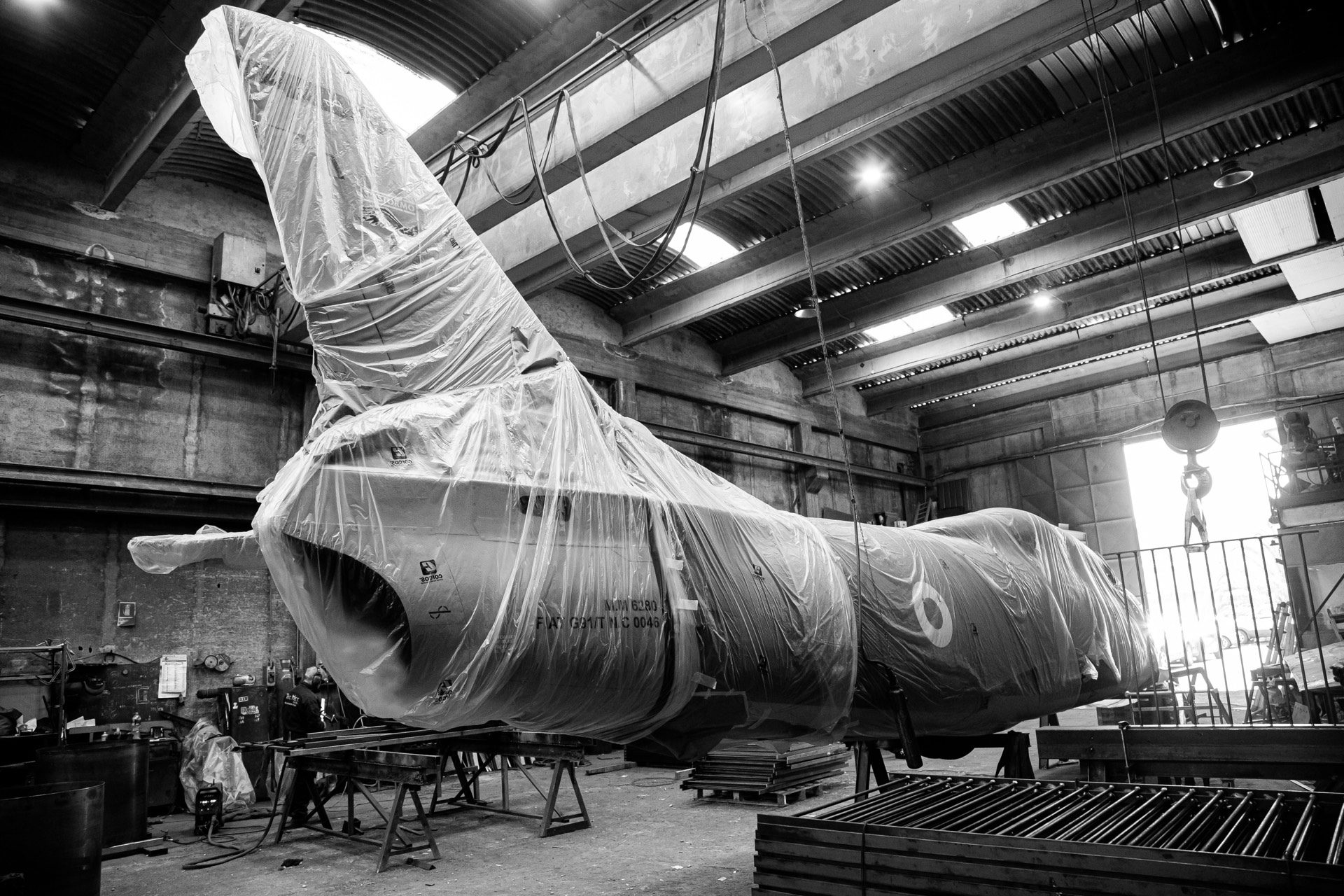
The restoration of the G.91T took over five years. The aircraft was completely dismantled and rebuilt: surfaces were treated, structures restored and damaged parts reconstructed. The work was entrusted to several specialized firms, including local bodywork and metalworking companies.
In 2024 BaxEnergy won the City of Catania's tender to redevelop the Via Fontanarossa roundabout, with a project that places the restored G.91T at the center of the area. Structural calculations were entrusted to the Genio Civile.
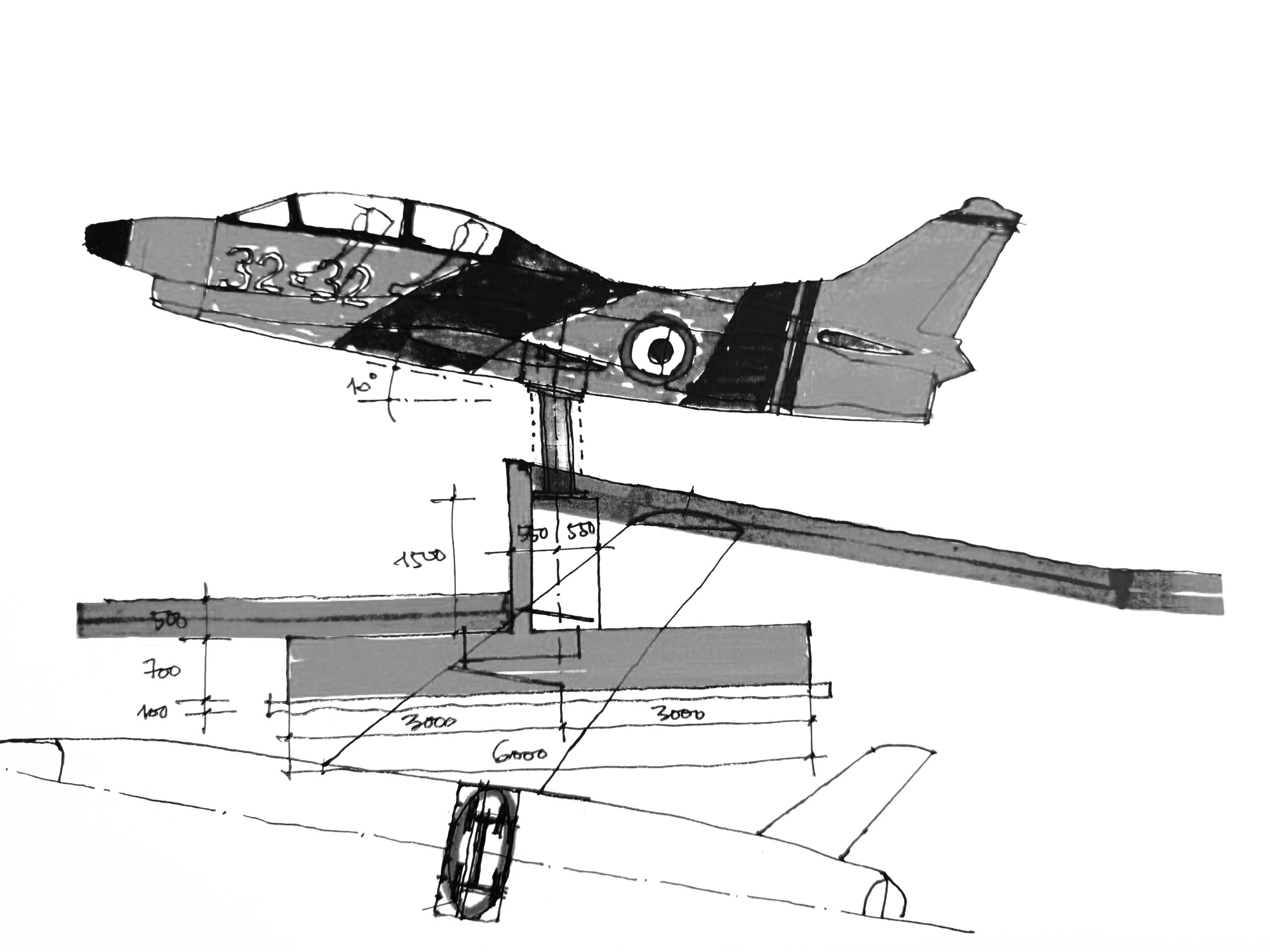
Work on the Via Fontanarossa roundabout began in September 2025, covering excavation, foundations, utilities and the metal support structure on which the G.91T is installed. Structural works were entrusted to SB Engineering.
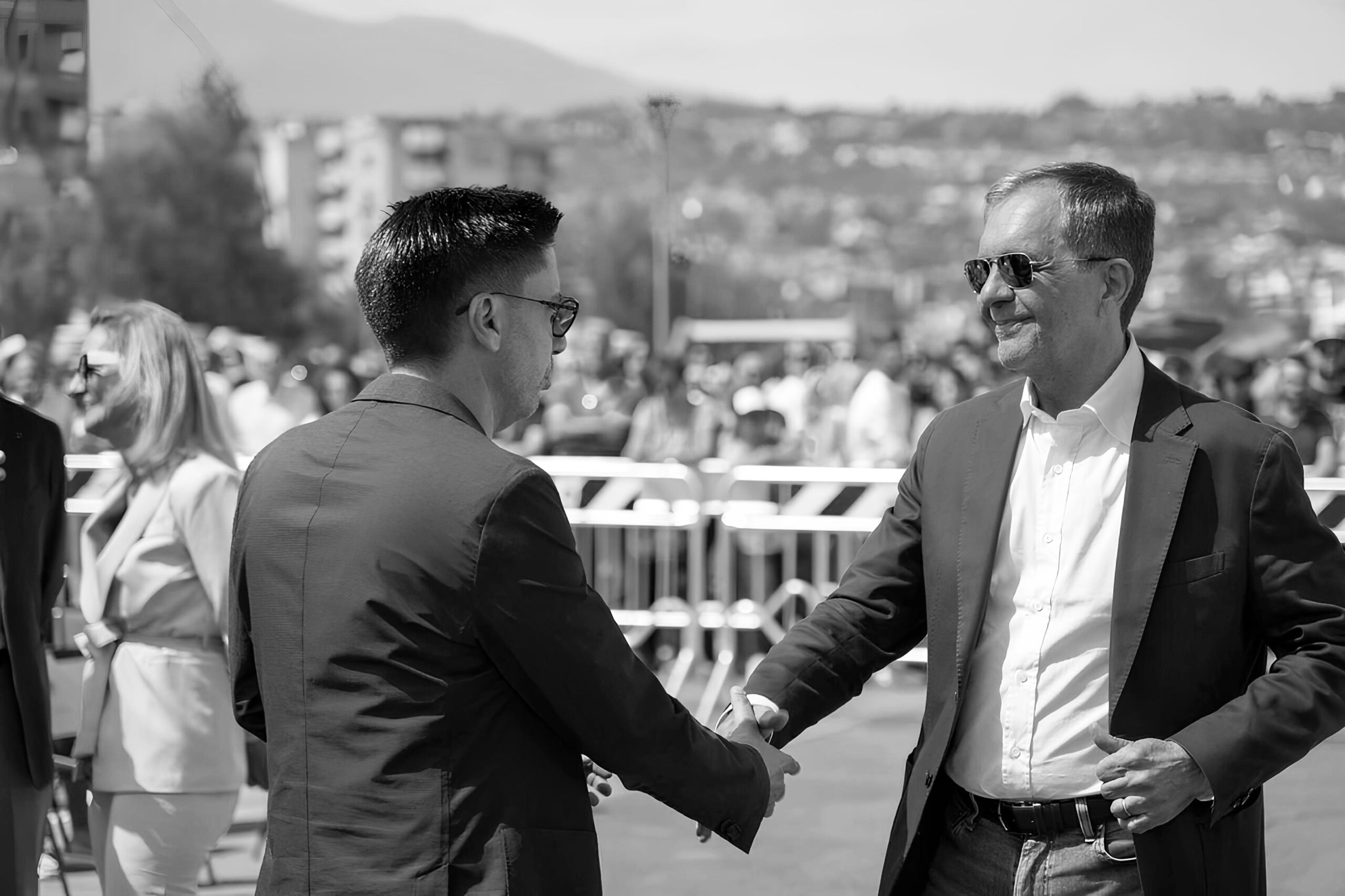
The monumental roundabout on Via Fontanarossa was inaugurated on 6 May 2026, with the restored G.91T at its center as a new urban landmark at the entrance to Catania Airport. The inauguration was covered by Quotidiano di Sicilia, Siciliaweb and TalkyMedia.
For me, Bright Start is a way to give philanthropic work continuity, structure and accountability. The objective is not simply to fund an activity. It is to help create opportunities that can open new paths for people and communities, while building the conditions for those opportunities to continue over time.
-cit. Ing. Simone Massaro
The individual projects may differ, but they share the same principle: an initial contribution should create value that can continue beyond the moment in which it is made.
Bright Start is the foundation through which I am developing a long-term approach to philanthropy. My aim is to transform resources into opportunities, inclusion and better places for the communities around me, starting from Catania and Sicily. I do not see philanthropy as a series of isolated contributions, but as a way to create the conditions in which people, organisations and communities can grow.
Oratorio Contemporaneo is a cultural project in development, promoted by Simone Massaro: a living, constantly evolving space where gesture, community and language intersect to generate something new. It is conceived not simply as a physical place but as a cultural ecosystem that transcends the traditional boundaries of art and gathering, connecting urban expression, creativity and collective growth. Every action will become part of a broader system: an open dialogue between individuals, ideas and territories, capable of building authentic and lasting relationships.
Oratorio Contemporaneo is designed with new generations in mind, yet it speaks to anyone who feels the urgency to actively engage in change, offering tools, spaces and visions to transform talent into impact. Its communities will not merely exist. They will be built, cross-pollinated and strengthened, giving rise to a new shared language that connects culture, identity and future.